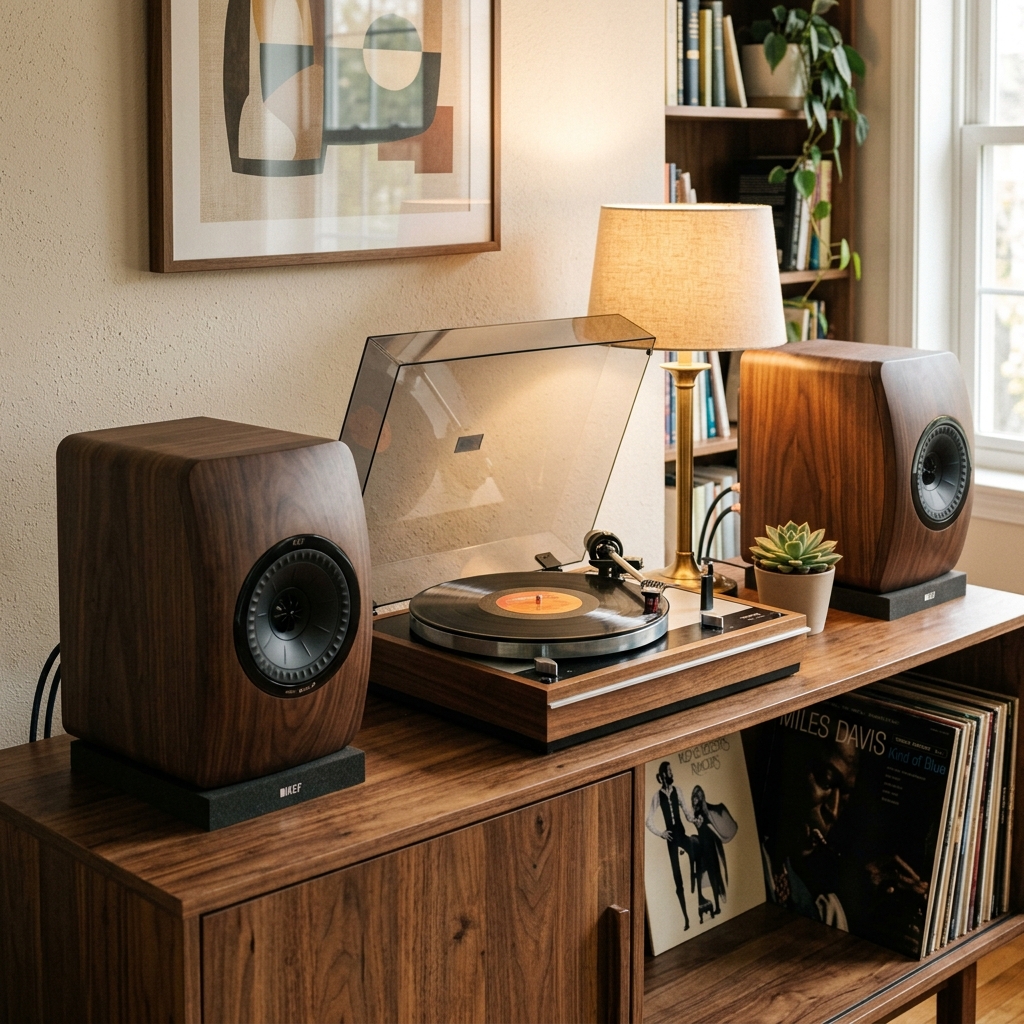
For anyone starting their journey into high-fidelity audio, one of the first and most critical decisions you will face is choosing between active speakers and passive speakers. This distinction defines how your system is powered, how it connects to your music sources, and how much control you have over its sound signature.
While both designs can deliver breathtaking sound quality, they represent completely different philosophies of system building. In this comprehensive guide, we'll break down the key differences, pros, and cons of active and passive speaker systems to help you choose the right path for your ears.
What Are Passive Speakers?
Passive speakers are the traditional choice for hi-fi setups. They do not have built-in amplification; instead, they require an external amplifier or receiver to send them power. The signal travels from your music source (like a turntable or CD player) to the amplifier, and then through speaker wire to the speakers.
The Pros:
- Unmatched Flexibility: You can mix and match components. If you want to upgrade your amplifier next year or change the DAC (Digital-to-Analog Converter), you can do so without replacing your speakers.
- Easy Speaker Upgrades: Passive speakers are durable and can last for decades. You don't have to worry about internal electronics failing.
The Cons:
- Cable Clutter & Space: You need space for an amplifier or receiver, and you must run physical speaker cables from the amp to each speaker.
- Component Matching: You must ensure the amplifier's power output (impedance and wattage) is compatible with your speakers to avoid damaging them.
What Are Active Speakers?
Active speakers (also known as powered speakers) have the amplifier built directly into the speaker cabinet. They plug directly into a wall outlet for power, and you can connect your music source directly to them via Bluetooth, optical, or RCA inputs without needing an external box.
The Pros:
- Perfect Amp-to-Driver Matching: The internal amplifier is custom-tuned by the manufacturer to match the exact physical characteristics of the speaker's drivers. This often results in optimal power delivery and exceptional sound quality straight out of the box.
- Clean, Minimalist Setup: No external boxes, no matching calculations, and far fewer cables. This makes them ideal for modern living rooms, offices, or turntable setups where space is limited.
The Cons:
- Limited Upgrade Paths: The amplifier and DAC are sealed inside. If you want to upgrade the amplification, you have to buy a completely new pair of speakers.
- Weight and Power: Because they contain heavy amplifiers inside, they are heavier, and both speakers (or at least the primary master speaker) must be plugged into power.
Active vs. Passive: Head-to-Head Comparison
| Feature | Active Speakers | Passive Speakers |
|---|---|---|
| Amplification | Built-in (Plug & Play) | External (Requires Amp/Receiver) |
| Flexibility | Limited (All-in-One) | High (Component upgrades) |
| Cables Required | Power cable + source connection | Speaker cables + power to amp |
| Best For | Minimalists, Convenience, Space-saving | Tinkerers, Audiophiles, Custom rooms |
Conclusion: Which System Fits Your Lifestyle?
If you enjoy the process of research, swapping out cables, testing different DACs, and slowly building a custom audio stack over time, a **passive speaker** system is incredibly rewarding. It is a hobbyist's dream.
However, if you want high-fidelity sound without the clutter, configuration matching, and technical complexity, **active speakers** are the modern standard. Many premium brands now specialize in all-in-one active setups. For example, the Verona VN12 System integrates Class-D amplifiers directly into a sleek, active acoustic enclosure, giving you audiophile-grade response, deep bass, and clear highs without the need for a bulky external receiver. Ultimately, the choice depends on whether you value component flexibility or seamless convenience.
Comments
Post a Comment