Sonos vs Bose home theater compared
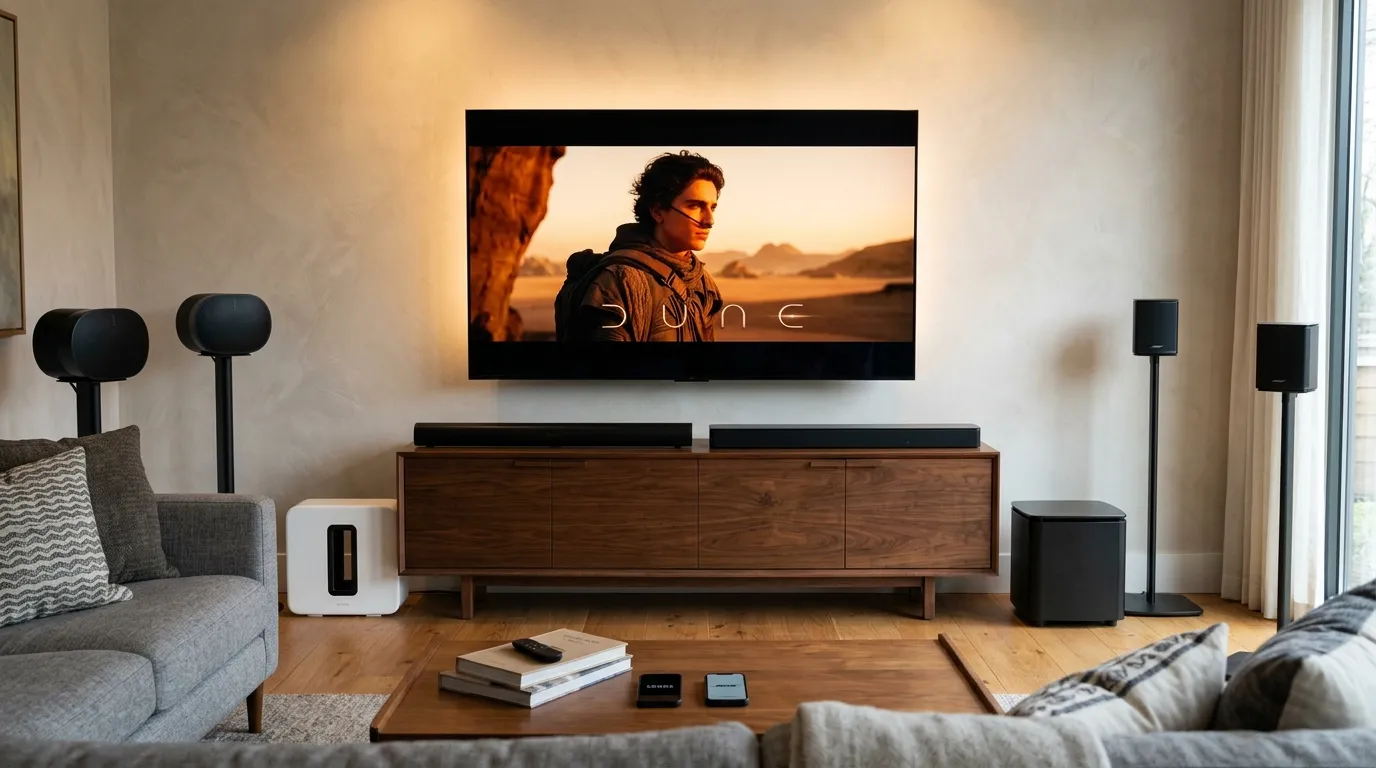
Choosing the perfect home theater system can transform your living room into a cinematic haven. Among top contenders, Sonos and Bose stand out, each offering innovative sound solutions tailored for immersive movie nights. If you seek crystal-clear dialogue, rich bass, and seamless connectivity, understanding their latest offerings is essential. The Sonos Arc Ultra delivers cutting-edge Dolby Atmos sound and deep bass without a separate subwoofer, ideal for those craving premium audio quality. Meanwhile, Bose’s Smart Ultra Soundbar impresses with adaptive room calibration and AI-driven voice modes, offering versatility and convenience for diverse listening environments.
This Sonos vs Bose home theater compared guide will explore features, audio performance, smart capabilities, and expandability. Whether you prioritize immersive surround sound or smart home integration, this review breaks down what makes each brand distinct. Expect clarity on system setups, compatibility, and user experiences, helping you make an informed choice for 2026’s top-tier home theater tech.
Did You Know?
Did you know? Sonos was among the first to pioneer wireless multi-room home theater sound systems, revolutionizing how we experience cinema at home.
Source: Sonos Official Website
Overview of Sonos Home Theater Systems
When comparing Sonos vs Bose home theater systems, Sonos stands out with its strong lineup tailored for immersive audio and seamless smart home integration. The 2026 range includes top-tier models like the Sonos Arc Ultra, which embodies the pinnacle of their sound technology.
The Sonos Arc Ultra is their flagship soundbar designed for audiophiles and cinephiles alike. It features cutting-edge Dolby Atmos surround sound paired with innovative Sound Motion technology, delivering deep bass without the need for a dedicated subwoofer. This model produces cinematic audio with rich mids, crisp highs, and controlled bass that fills the room dynamically. Trueplay room tuning technology personalizes the sound to your space, ensuring every detail is crystal clear. With HDMI eARC support and Wi-Fi/AirPlay 2 compatibility, the Arc Ultra easily integrates with your home theater setup and smart home ecosystem. It's also expandable with the addition of a Sonos Sub or surround speakers, creating a fully immersive multi-speaker environment.
For those with smaller spaces or tighter budgets, the Sonos Beam Gen 2 is a compelling choice. This midrange compact soundbar still supports Dolby Atmos, offering an impressive wide 3D soundstage. Its sharp dialogue clarity, full bass response, and clear highs make it well-suited for typical living rooms and bedrooms. Like the Arc Ultra, it supports HDMI eARC and Trueplay tuning, and boasts comprehensive smart assistant integration including Alexa, Google Assistant, and AirPlay 2. Priced under $500, the Beam Gen 2 provides premium audio features in a more accessible package.
Expanding Sonos systems is straightforward and flexible. The Sonos Sub 4 wireless subwoofer pairs seamlessly with either soundbar to enhance bass output dramatically. This modular ecosystem approach means users can start with one soundbar and gradually build out a full surround sound setup. Sonos also provides the Sonos Era 100 and Era 300 speakers as additional surround options, customizable through the Sonos S2 app.
Connectivity options across the Sonos lineup include HDMI eARC for high-bandwidth audio transmission, robust Wi-Fi networking for multi-room streaming, and AirPlay 2 support for effortless integration with Apple devices. Voice assistants Alexa and Google Assistant are integrated into the system for hands-free control throughout the home theater experience.
Pricing for the latest Sonos models reflects their positioning in the market. The Arc Ultra sits at the premium price point, around $1200, while the Beam Gen 2 targets budget-conscious buyers with prices below $500. The Sonos Sub 4 typically ranges near $800, representing a mid-range investment to complement the soundbars.
This tiered product strategy allows Sonos to cater to a wide spectrum of users—from those seeking high-end audiophile setups to everyday consumers prioritizing convenience and versatility. The company’s keen focus on sound quality, combined with smart home compatibility, distinguishes Sonos home theater systems in an increasingly competitive market.
When placing Sonos home theater systems alongside Bose, particularly for the flagship models, Sonos emphasizes richer cinematic depth and sound customization through Trueplay and Sound Motion innovation. Bose competes strongly with its Smart Ultra Soundbar and AI-driven voice modes, but Sonos typically appeals more to those prioritizing a modular ecosystem and superior Dolby Atmos execution.
Overall, Sonos home theater systems maintain a firm balance of advanced sound technologies and user-friendly smart features. The models represent a compelling choice whether you are outfitting a large media room with the Arc Ultra or upgrading a smaller living space with the Beam Gen 2. Their pricing reflects this diversity, ensuring options exist across budgets without sacrificing audio quality or smart functionality.
Overview of Bose Home Theater Systems
Bose continues to impress in the home theater market with its flagship offering, the Bose Smart Ultra Soundbar. This system packs Dolby Atmos support, delivering an immersive soundstage that rivals premium competitors. Featuring nine high-performance transducers, it balances punchy bass and crisp treble across a wide sound field. A standout is its AI-driven voice and dialogue enhancement mode that ensures speech remains clear even in the midst of action-packed scenes.
Calibration technology is crucial for optimal sound, and Bose employs its proprietary ADAPTiQ/Adapt IQ room tuning system using a headset-based setup. This ensures that the soundbar adjusts precisely to your room's acoustic profile, reducing echo and enhancing clarity.
Connectivity is also a strong suit with the Bose Smart Ultra Soundbar. It supports Wi-Fi, Bluetooth, Apple AirPlay 2, Google Chromecast, along with Alexa and Google Assistant smart integrations. This extensive compatibility allows seamless streaming and voice control capabilities. Moreover, the system is expandable with an optional Bass Module and rear surround speakers for true home theater immersion.
While Bose aims for versatility and everyday usability, its pricing reflects its premium aspirations, typically retailing around $900. This positions it slightly below the Sonos Arc Ultra but well above the smaller Sonos Beam Gen 2.
Comparing Bose's Smart Ultra Soundbar with Sonos Rivals
The Bose Smart Ultra Soundbar sits in a competitive tier alongside Sonos’ latest home theater solutions, notably the Sonos Arc Ultra and Sonos Beam Gen 2. Both Bose and Sonos offer flagship Dolby Atmos soundbars with spatial audio capabilities, but Bose distinguishes itself through its AI enhancements and broad smart assistant support.
Room calibration technologies differ, with Bose using ADAPTiQ/Adapt IQ—a headset-centered setup that some users find more tailored—versus Sonos’ Trueplay software tuning that adapts sound via microphone mapping in the room.
Transducer count emphasizes Bose’s commitment to dynamic sound reproduction with its nine drivers, though Sonos Arc Ultra leads slightly with eleven, promising a richer soundstage. The more budget-friendly Beam Gen 2 sports five transducers, fitting smaller rooms.
Pricing Context and Value Proposition
Looking at pricing, Bose’s Smart Ultra Soundbar at approximately $900 places it as a premium but slightly more affordable alternative to the Sonos Arc Ultra, which averages around $1,100. The Sonos Beam Gen 2, positioned for smaller spaces and lighter budgets, costs about $450.
This pricing dynamic situates the Bose Smart Ultra Soundbar as an appealing choice for those seeking a high-quality, versatile Dolby Atmos system that integrates not only with home audio but also smart home ecosystems robustly. Its AI-enhanced voice clarity and flexible connectivity make it ideal for users valuing everyday usability along with cinematic audio performance.
In summary, Bose’s home theater lineup, led by the Smart Ultra Soundbar, offers a compelling blend of advanced audio technology, smart features, and expansive connectivity. This makes it a formidable contender against Sonos’ top-of-the-line soundbars, particularly for users prioritizing voice clarity and multi-platform compatibility in a home theater environment.
Key Differences in Audio Quality
When comparing the audio quality of Sonos and Bose home theater systems, the differences start with their approach to Dolby Atmos performance. The Sonos Arc Ultra excels with immersive Dolby Atmos surround sound powered by its Sound Motion technology, which delivers deep, rich bass without requiring a separate subwoofer. This soundbar also features Trueplay tuning that adjusts acoustics based on your room, ensuring crisp highs, cinematic mids, and controlled bass throughout the listening space.
On the other hand, the Bose Smart Ultra Soundbar showcases Dolby Atmos through a system equipped with nine transducers and AI-driven voice and dialogue enhancement modes. These features sharpen vocal clarity, making dialogue stand out even in complex sound environments. Bose leverages its ADAPTiQ room calibration technology to fine-tune sound profiles for the best experience. This system leans towards a slightly wider soundstage ideal for everyday versatility.
Bass response is another key differentiator. Sonos's patented Sound Motion technology allows the Arc Ultra to deliver deep bass impact without an additional subwoofer, making it a sleek and minimalist option for bass lovers. Meanwhile, Bose provides punchy bass that benefits from an optional Bass Module, allowing users to customize their low-end response depending on space and preference. This modularity gives Bose fans more control over their bass experience but requires additional investment for the fullest effect.
When it comes to soundstage and overall clarity, Sonos achieves a cinematic feel with sharp highs and dynamic mids that emphasize a balanced sound suitable for movie and music enthusiasts alike. Bose counters with a wide and immersive soundstage enhanced by AI-powered treble and vocal modes that bring forward nuanced sounds and crisp audio details. This makes the Bose Smart Ultra Soundbar a strong contender for listeners prioritizing vocal clarity and immersive multi-directional audio.
The following pie chart visually breaks down the key audio quality domains between Sonos and Bose, highlighting how Dolby Atmos immersion, bass performance, and soundstage/clarity contribute to their distinct sonic signatures.
User Experience and Smart Features
The Sonos Arc Ultra and Beam Gen 2 both impress with their user-friendly Sonos S2 app, which offers intuitive multi-room control and frequent updates. The Arc Ultra's interface feels comprehensive, catering well to advanced users aiming for a premium cinematic setup, while the Beam's app experience is clean and simple, ideal for smaller room configurations. Bose delivers with its Bose Music app, integrating ADAPTiQ calibration and an AI-driven voice mode control, allowing for personalized sound adjustments and user-friendly management.
Room calibration sets these systems apart. Sonos uses Trueplay tuning accessible through the S2 app on iOS devices, providing dynamic acoustics tailored to your space. Bose’s ADAPTiQ technology is unique with its headset-based calibration method, delivering personalized audio that accounts for room dimensions and layout by physically mapping the environment.
Voice assistant integration is robust across both brands. Sonos soundbars seamlessly support Alexa, Google Assistant, and AirPlay 2, making them compatible with most ecosystems. Bose goes a step further by including Google Chromecast alongside Alexa, Google Assistant, and AirPlay 2, enhancing its versatility for streaming and voice control.
Smart features elevate the listening experience. Sonos Arc Ultra incorporates Sound Motion technology to enhance bass performance without needing a subwoofer and offers an Auto Trueplay mode that continually optimizes audio. The Beam Gen 2 delivers a wide 3D soundstage with superior dialogue clarity. Bose's AI-driven voice/dialogue mode smartly highlights vocals, paired with adaptive sound technology that continually adjusts to your environment.
Both systems support wireless expansion for a complete surround sound setup. Sonos users can add the Sub 4 and Era surround speakers, while Bose offers expansion through its Bass Module and wireless surround speakers, allowing tailored home theater configurations without cable clutter.
Key User Experience Steps
| Feature | Sonos Arc Ultra | Sonos Beam Gen 2 | Bose Smart Ultra Soundbar |
|---|---|---|---|
| User Interface | Sonos S2 app with intuitive multi-room control, regular updates | Sonos S2 app optimized for compact setup | Bose Music app with ADAPTiQ calibration, voice mode control |
| Room Calibration | Trueplay tuning via Sonos S2 app using iOS device | Trueplay tuning for small rooms | ADAPTiQ headset-based personalized room calibration |
| Voice Assistant Integration | Alexa, Google Assistant, AirPlay 2 support | Alexa, Google Assistant, AirPlay 2 support | Alexa, Google Assistant, AirPlay 2, Google Chromecast |
| Smart Features | Sound Motion technology for enhanced bass without subwoofer, Auto Trueplay | Wide 3D soundstage with dialogue enhancement | AI-driven voice/dialogue mode, Adaptive sound technology |
| Expandability | Wireless addition of Sub 4 and Era surrounds for full surround sound | Supports additional surrounds and subwoofer wirelessly | Expandable with Bose Bass Module and surrounds wireless |
Connectivity and Expandability
Both Sonos and Bose offer strong connectivity options and expandability, but each caters to slightly different needs and preferences. Sonos home theater systems lean heavily on Wi-Fi and AirPlay 2 compatibility, creating a seamless experience within the Sonos ecosystem. Sonos models like the Arc Ultra and Beam Gen 2 feature HDMI eARC for high-fidelity audio from TVs, plus Trueplay tuning technology that adapts sound to your room environment. Sonos systems integrate well with Alexa, Google Assistant, and Apple HomeKit through AirPlay, making them versatile for smart home users.
Bose’s Smart Ultra Soundbar offers even broader wireless connectivity options including Bluetooth and Chromecast in addition to Wi-Fi and AirPlay 2. This makes Bose a flexible choice for users who want multiple streaming protocols. Their AI-driven ADAPTiQ/Adapt IQ technology intelligently calibrates sound based on your room acoustics. Plus, Bose supports Alexa and Google Assistant natively for voice control.
When it comes to expandability, both brands allow adding subwoofers and surround speakers, though with different ecosystems. Sonos supports expansion with the Sonos Sub and Era series surrounds, ideal for scaling up to a full 5.1 or Atmos setup. Bose expands with the Bass Module and surround speakers for a similarly immersive experience. Sonos’s ecosystem tends to favor wireless multi-room setups, while Bose combines wireless with Bluetooth for versatile placement options. Overall, Sonos excels in ecosystem cohesion and tailored room tuning, while Bose offers versatile connectivity options and intelligent audio tuning for diverse environments.
Sonos Home Theater Connectivity
Sonos systems emphasize seamless integration within the Sonos ecosystem, leveraging advanced Wi-Fi and AirPlay 2 technologies. Their smart home compatibility is centered around Alexa, Google Assistant, and Apple HomeKit recognition through AirPlay.
- • Wi-Fi and AirPlay 2 for wireless streaming
- • HDMI eARC support for high-quality audio
- • Expandable with Sonos Sub and surround speakers
- • Trueplay room tuning for optimized sound
Bose Home Theater Connectivity
Bose systems deliver versatile connectivity with both Wi-Fi and Bluetooth, plus Chromecast and AirPlay 2 support. Their smart home integration includes Alexa and Google Assistant compatibility, with AI-driven sound calibration for enhanced audio.
- • Wi-Fi, Bluetooth, AirPlay 2, and Chromecast
- • AI-driven Adapt IQ room calibration
- • Expandable with Bose Bass Module and surrounds
- • Multi-platform voice assistant support
| Feature | Sonos Arc Ultra | Sonos Beam Gen 2 | Bose Smart Ultra Soundbar |
|---|---|---|---|
| Connectivity | Wi-Fi, AirPlay 2, HDMI eARC | Wi-Fi, AirPlay 2, HDMI eARC | Wi-Fi, Bluetooth, AirPlay 2, Chromecast |
| Smart Home Integration | Alexa, Google Assistant, AirPlay 2-compatible devices | Alexa, Google Assistant, AirPlay 2-compatible devices | Alexa, Google Assistant, Chromecast-friendly |
| Expandability | Sonos Sub, Sonos Era surrounds | Sonos Sub, Sonos Era surrounds | Bose Bass Module, Bose Surround Speakers |
| Room Calibration | Trueplay tuning | Trueplay tuning | ADAPTiQ/Adapt IQ AI-driven |
| Wireless Protocols | Wi-Fi, AirPlay 2 | Wi-Fi, AirPlay 2 | Wi-Fi, Bluetooth, AirPlay 2, Chromecast |
Final Thoughts on Value for Money
When evaluating Sonos and Bose home theater systems in 2026, value for money boils down to more than just initial price tags. The Sonos Arc Ultra stands out as a premium flagship option with an estimated price around $1,200, offering state-of-the-art Dolby Atmos sound and advanced features like Sound Motion technology and Trueplay room tuning. This makes it a strong choice for audiophiles seeking a high-end, immersive experience.
Meanwhile, the Sonos Beam Gen 2 offers excellent value under $500, making it a compelling option for smaller rooms or budgets. It retains Dolby Atmos, solid sound clarity, and integration within the Sonos ecosystem, providing considerable sound quality at a lower cost. The Beam Gen 2 is especially appealing for buyers prioritizing smart features and wireless expandability without the premium price.
Bose's Smart Ultra Soundbar sits between these two in price at approximately $1,000, delivering balanced sound with AI-driven voice enhancement and versatile connectivity options like Wi-Fi, Bluetooth, AirPlay 2, and Chromecast. Bose emphasizes adaptability with its ADAPTiQ calibration and strong build quality, appealing to users who want robust, user-friendly technology with some premium elements.
Durability is another vital factor. Both Sonos and Bose products are built to last, with solid materials and reliable construction. Sonos systems benefit from an ecosystem that supports expansion through subwoofers and surround speakers, reinforcing long-term investment in an adaptable home theater setup. Bose similarly offers expansion with compatible bass modules and surround units.
None of these brands compromise on warranty, typically offering a standard one-year coverage with options to extend. The overall longevity and support add significant value, especially for users committed to upgrading gradually within a familiar ecosystem.
The comparison of features reflects the balance consumers face: Sonos favors innovative sound technologies and ecosystem integration, while Bose delivers versatile connectivity and durability with intelligent sound calibration. Choosing between them hinges on whether upfront cost or ecosystem flexibility better meets your home theater goals.
Frequently Asked Questions
What is better for movie watching, Sonos or Bose?
For movie watching, the Sonos Arc Ultra stands out with its immersive Dolby Atmos, Sound Motion technology, and cinematic sound tuning. It delivers deep bass and crisp highs without a subwoofer, creating a truly enveloping experience. Bose's Smart Ultra Soundbar also performs well with Dolby Atmos and AI-driven voice mode but is often preferred for versatile everyday use rather than pure cinematic depth.
Can I integrate Sonos or Bose systems with existing equipment?
Both Sonos and Bose systems offer strong integration capabilities. Sonos supports seamless wireless setup via the Sonos S2 app and can expand easily with Sonos Sub and Era speakers. It also offers HDMI eARC and AirPlay 2 support. Bose includes Wi-Fi, Bluetooth, AirPlay 2, and Chromecast, plus ADAPTiQ room calibration for optimized sound. Both work well with smart assistants like Alexa and Google Assistant, so integration with diverse setups is smooth.
Which system provides better customer support?
Both Sonos and Bose provide reputable customer support, including warranty services and dedicated helplines. Sonos is known for timely software updates and a responsive community forum through the Sonos S2 ecosystem. Bose offers strong in-store support, particularly via authorized dealers, and a comprehensive online support portal. User experiences suggest similar levels of satisfaction, but Bose's physical retail presence can be advantageous for hands-on support.
What is better for movie watching, Sonos or Bose? ▼
Can I integrate Sonos or Bose systems with existing equipment? ▼
Which system provides better customer support? ▼
Conclusion
When Sonos vs Bose home theater compared, both brands present compelling options tailored to different needs. The Sonos Arc Ultra stands out with its premium Dolby Atmos immersion, Sound Motion technology, and Trueplay room tuning, delivering an exceptional cinematic audio experience. For those with smaller rooms or budgets, the Sonos Beam Gen 2 offers rich bass and clear highs at under $500, making it a versatile and affordable choice.
Bose counters with the Smart Ultra Soundbar, featuring AI-driven voice modes and broad connectivity options including Wi-Fi, Bluetooth, AirPlay 2, and Chromecast. Its adaptable sound calibration and crisp vocal clarity make it ideal for everyday use, appealing to those who prioritize conversation intelligibility and device versatility.
Both ecosystems allow extensions with subwoofers and surround speakers, enabling immersive, full-scale home theater systems. The decision ultimately hinges on priorities: choose Sonos for an immersive, cinema-like surround sound setup, or Bose for consistent, versatile performance with enhanced voice clarity and connectivity.
For anyone contemplating their next home theater upgrade in 2026, evaluating room size, usage goals, and smart home compatibility will guide the best fit. Both Sonos and Bose offer cutting-edge models that enhance entertainment, whether watching movies or streaming music.
TL;DR: Choosing the right home theater system can elevate your movie-watching experience, with Sonos and Bose as top options. The Sonos Arc Ultra offers exceptional Dolby Atmos sound and deep bass without a separate subwoofer, while Bose’s Smart Ultra Soundbar features adaptive calibration and AI voice modes for versatility. This guide will help you compare their features and choose the best fit for your needs.


Comments
Post a Comment