Dolby Atmos: Peeling Back the Layers of Sound (Without the Hype)
I’ll never forget the first time I realized sound could sneak up on me. It wasn’t Dolby Atmos (yet)—just a really intense helicopter scene in an action flick at my local multiplex. What I didn’t expect was that years later, that same feeling of "whoa, the sound is moving!" would get an upgrade. Dolby Atmos is that upgrade—except it’s not just about louder or more speakers. It’s about being hit with sound from above, behind, and places you never thought possible. But is it all it’s cracked up to be? Let’s wander through the world of Dolby Atmos—past the shiny logos and right into the heart of what makes it tick (and whether it really matters for you).
Beyond the Logo: What is Dolby Atmos Really?
You see the Dolby Atmos logo everywhere these days—on TVs at Costco, on your soundbar box, in your favorite streaming apps, and even on Apple Music playlists. But what is Dolby Atmos, really? Is it just another fancy sticker, or does it actually change the way you hear movies and music? Let’s peel back the layers and get to the heart of Dolby Atmos technology, without the hype.
From Theaters to Your Living Room: A Quick History
Dolby Atmos made its big debut in 2012, and not just anywhere—it launched in a handful of commercial theaters around the world. The very first movie to feature Dolby Atmos was Disney Pixar’s Brave. Back then, it was a game-changer for cinema sound, but nobody guessed how quickly it would spread. Fast forward to today, and you’ll find Dolby Atmos everywhere: in home theaters, on streaming platforms, inside soundbars, and even on music streaming services.
Classic Surround Sound vs. Dolby Atmos: What’s the Difference?
If you remember the first time you heard surround sound, you probably recall how cool it was to hear effects coming from behind you. Traditional surround sound uses channels—like 5.1 or 7.1 setups—where each speaker plays a specific part of the audio. But here’s the thing: those channels are fixed. Sound can only move from one speaker to another in a flat, horizontal circle around you.
Dolby Atmos technology changes that completely. The big leap? Height speakers. Instead of just surrounding you, Atmos adds speakers above you—think of configurations like 5.1.2 or 7.1.4, where the last number refers to the number of overhead or height speakers. In some theaters, you’ll find 16 or more ceiling speakers for a truly immersive experience.
Three Dimensional Sound: The Magic of Height Speakers
So, what’s the real magic behind Dolby Atmos? It’s all about three dimensional sound. With height speakers, sound isn’t just coming from the front, sides, or behind—it can move above you, too. Imagine a helicopter flying overhead, rain falling from the ceiling, or a bird swooping from one corner of the room to another. That’s the kind of realism Dolby Atmos brings.
Here’s a quick look at common Dolby Atmos speaker setups:
- 5.1.2: Five traditional surround speakers, one subwoofer, and two height speakers
- 7.1.4: Seven surround speakers, one subwoofer, and four height speakers
And in commercial theaters, you might find setups with 16 or more ceiling speakers for maximum immersion.
Audio Objects: Breaking Free from Channels
Here’s where Dolby Atmos really breaks the mold. Instead of locking sounds to specific channels, it uses something called audio objects placement. Think of each sound—a buzzing fly, a racing car, a voice—as its own “object” that can be placed anywhere in the 3D space of the room. The system figures out which speakers to use, and how loud, so that the sound moves smoothly and naturally around you.
This means sound designers aren’t limited by the number of channels. They can move sounds anywhere—left, right, behind, above, or even diagonally across the room. You get a sense of space and movement that’s way beyond what classic surround sound could ever do.
Flexible Configurations: Atmos for Every Space
One of the coolest things about Dolby Atmos technology is how flexible it is. You don’t need a massive theater to enjoy it. Whether you have a full-blown home theater with ceiling speakers, a soundbar with up-firing drivers, or just a pair of headphones, there’s an Atmos experience for you. The system adapts to your setup, making the most of whatever speakers you have.
That’s why you see the Dolby Atmos logo everywhere—from big cinema screens to compact living rooms and even in your pocket on music apps.
To me, Dolby Atmos is what I always felt like surround sound should have been.
So, when you spot the Dolby Atmos logo, you’re not just seeing a brand—you’re seeing a promise of sound that moves in every direction, filling your space with true three-dimensional audio.
Surround Sound vs. 3D Audio: Why Should You Care?
Let’s break down what’s really changed in surround sound technology over the years—and why Dolby Atmos is such a big deal for anyone chasing a truly immersive sound experience. If you’ve ever set up a home theater or just wondered why movies sound so different at the cinema, this is for you.
Traditional Surround Sound: Lighting Up the Room
For decades, surround sound meant channels—think 5.1 or 7.1 setups. In a typical 5.1 system, you’ve got:
- Left and right front speakers (stereo channels)
- A center channel (for dialogue)
- Left and right surround speakers (for effects)
- A subwoofer (that’s the “.1” for bass)
Each channel gets its own speaker (or set of speakers in a big theater). But here’s the catch: when a sound moves, like a helicopter flying from the front to the back of the room, the audio doesn’t glide smoothly. Instead, it jumps from one channel to the next. In a commercial theater, all the speakers on the left wall might play the same sound at the same time. So when the chopper flies left, you’re lighting up the entire left side of the room at once. It’s cool, but not exactly realistic.
Atmos and 3D Audio: Dynamic Audio Placement
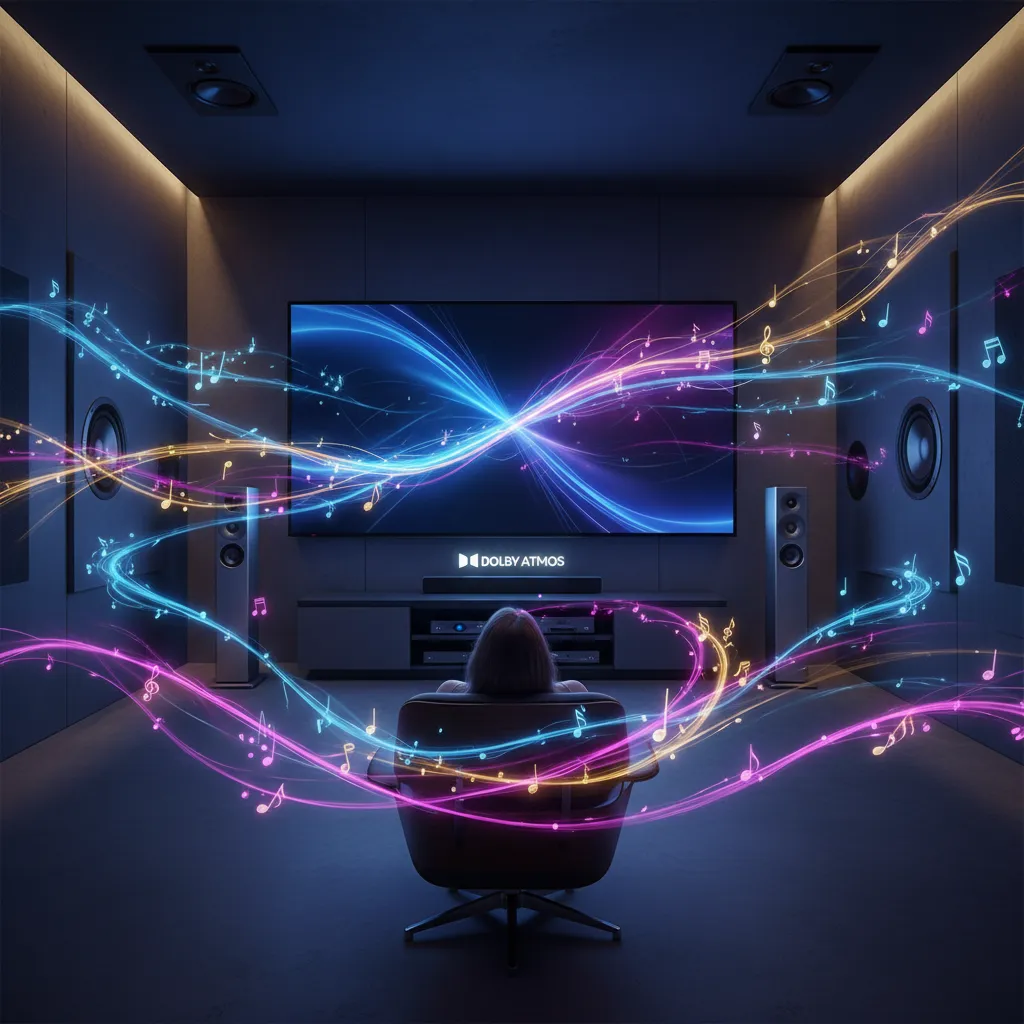
Dolby Atmos changes the game by moving away from channels and focusing on audio objects placement. Instead of being locked to a specific speaker, a sound can be placed anywhere in 3D space—left, right, behind, or even above you. This is what makes realistic sound reproduction possible.
Atmos can handle up to 128 audio tracks, including 118 independent sound “objects.” That means a sound designer can take something as small as a buzzing fly and move it around the room, one speaker at a time, in a way that feels totally natural. As Dolby puts it:
That fly’s buzzing sound can be represented by any speaker in the room at any given time, independently or together.
So, if a fly zips from the front of the room, circles above your head, and lands behind you, Atmos lets the sound follow that exact path—no more lighting up entire walls at once. This is dynamic audio placement in action.
Height Channels: Adding a New Dimension
Another big leap with Atmos is the addition of height channels. In a home setup, this might mean two or four speakers on your ceiling (expressed as 5.1.2 or 5.1.4). In a commercial theater, there could be 16 or more overhead speakers. The result? Effects like rain or a helicopter flyover don’t just sound like they’re coming from around you—they sound like they’re actually above you. That’s a whole new level of immersive sound experience.
Object-Based vs. Channel-Based: Why It Matters
With traditional surround, all the speakers in a channel play the same thing. With Atmos, each speaker can play something different at the same time. This is the heart of object-based audio. It’s not just about having more speakers; it’s about how sound can move and live in the space around you.
Not All “Atmos” Is Created Equal
Here’s where things get tricky. Not every system labeled “Dolby Atmos” gives you the full 3D experience. Some soundbars and TVs use advanced psychoacoustic tricks to simulate height and movement with fewer speakers. These “virtual” Atmos setups process the audio to mimic overhead effects, even if you don’t have speakers on the ceiling. It’s clever, and it can sound pretty good—but it’s not quite the same as having physical speakers above you. The more speakers you have, the more convincing and natural the effect.
Atmos Adapts to Your Space
One of the coolest things about Atmos is its flexibility. Whether you have a huge commercial theater or a tiny living room, the system adapts. The processing can scale down to just two speakers if needed, using virtual techniques to create a sense of space. But remember: the real magic happens when you have more speakers, especially overhead. That’s when you get the full effect of dynamic audio placement—sounds that slip, swoop, and hover exactly where they should.
So, why should you care? Because with Atmos, you’re not just hearing sound—you’re inside it. And that’s a leap forward in immersive sound experience that traditional surround just can’t match.
Is Dolby Atmos for You? (And Where You’ll Bump Into It)
If you’ve watched a movie in a theater lately, you’ve probably already experienced Dolby Atmos—even if you didn’t know it. But Atmos isn’t just for the multiplex anymore. It’s everywhere: in living rooms, on soundbars, in headphones, and streaming from your favorite apps. The big question is, does Dolby Atmos make sense for you and your setup? And what can you actually expect when you see that shiny logo on your next device or streaming service?
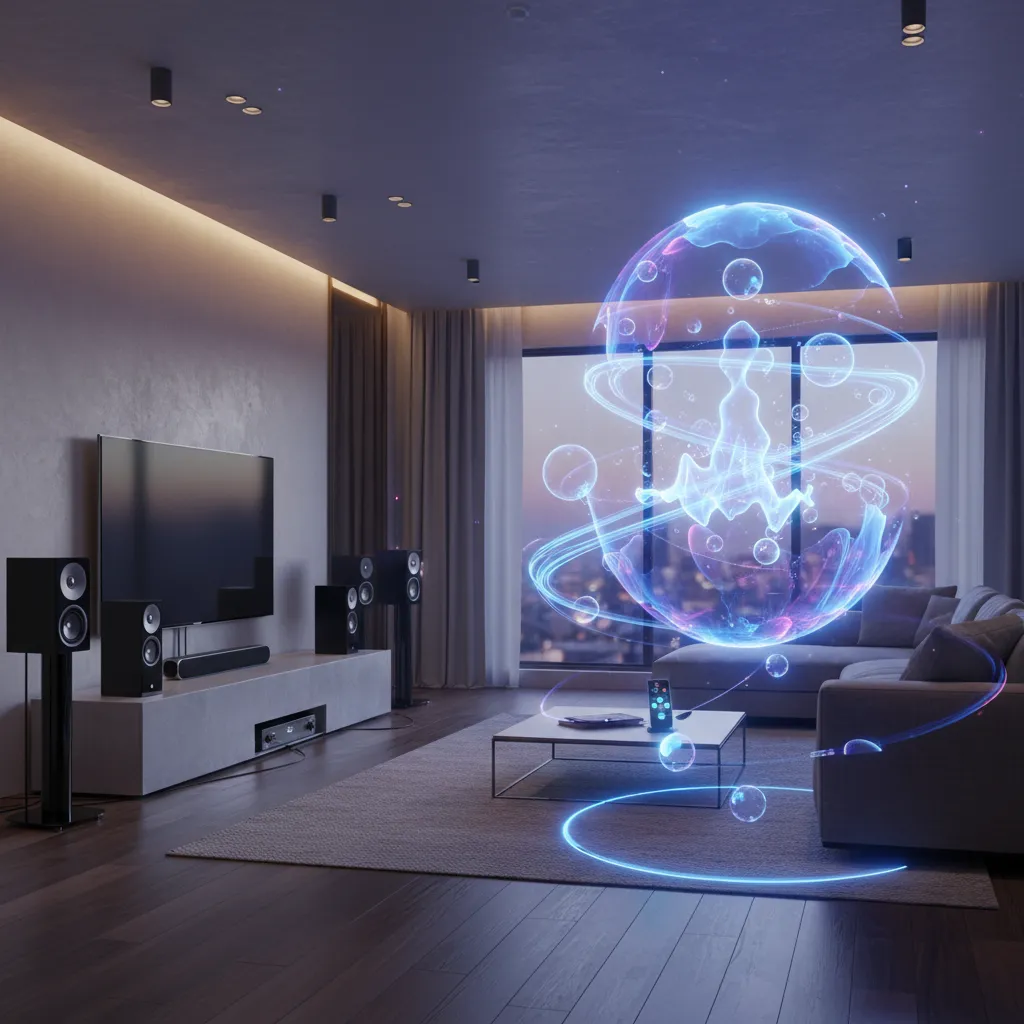
Let’s start with the basics. Dolby Atmos speakers and home theater setups are the gold standard. This is where Atmos first made waves: think multiple speakers, including ones that fire sound upward or are mounted in your ceiling, creating that “sound from above” effect. If you’re a home theater enthusiast, you might already be eyeing a 5.1.2 or even a 7.1.4 system, where the numbers represent the number of speakers and subwoofers. This is where you get the full, jaw-dropping Atmos experience—spaceships flying overhead, rain falling all around, and action that feels like it’s happening in your living room.
But you don’t need to go all-in with a dozen speakers to get a taste of Atmos. Modern Dolby Atmos soundbars are a popular middle ground. Many soundbars now include up-firing drivers that bounce sound off your ceiling, simulating those height effects. Some, like the KEF XIO, even deliver a 5.1.2 Atmos experience in a single, compact package. If you want immersive sound without the hassle of running wires or cutting holes in your ceiling, a soundbar is a great way to go. Just keep in mind: the room’s shape and your ceiling height can affect how convincing those effects sound.
Here’s where things get interesting—and a little confusing. You’ll now see the Dolby Atmos badge on everything from TVs to headphones, and even smartphones. Some TVs claim to offer Atmos sound, but without dedicated up-firing or ceiling speakers, you’re getting a “virtualized” version. This means the TV uses clever digital processing (sometimes called psychoacoustics) to trick your ears into hearing height and surround effects from just two speakers. It’s impressive for what it is, but don’t expect the same “wow” factor as a full-blown home theater. As one industry observer put it, “You can still get a Dolby Atmos effect from just two speakers. It’s virtual. I mean, it’s kind of faked.”
Headphones are another place you’ll bump into Atmos. Many streaming services—think Apple Music, Tidal, and Netflix—now offer streaming content Atmos and Dolby Atmos music. With the right headphones and a device that supports Atmos, you can experience music and movies with a sense of space and directionality that goes way beyond stereo. Is it as dramatic as a room full of speakers? Not quite. But for music lovers, it’s “insanely fun.” And for gamers, Atmos can be a “game changer,” letting you hear footsteps above or behind you for a real competitive edge.
So, is Dolby Atmos for you? If you’re a movie buff or gamer who craves the most immersive experience, investing in a true Atmos home theater setup or a high-end soundbar with up-firing drivers is absolutely worth it. If you’re more casual, or you’re limited by space or budget, virtualized Atmos on a soundbar, TV, or headphones still gives you a taste of what the technology can do—just don’t expect the ceiling to disappear or a spaceship to actually fly over your couch.
The truth is, Dolby Atmos has become as much a brand as a technology. You’ll see the logo everywhere, but the results really depend on your gear. The more speakers you have, the more impressive the effect. But even at its most basic, Atmos usually sounds bigger, more expansive, and more three-dimensional than standard audio. As support for Dolby Atmos gaming and music grows across platforms, you’ll keep bumping into it—sometimes in subtle ways, sometimes in full-blown, pantomime acrobatics for your ears. Check your device’s settings, look for the literal logo, and remember: with Atmos, the magic is real, but how much you feel it depends on how far you’re willing to go.
TL;DR: Dolby Atmos adds a fresh dimension to your listening, letting sounds swirl around and above you—whether you’re in a massive theater or just on your couch. It’s not always as mind-blowing as the marketing claims, but when it works, it’s a next-level experience that’s easier to access than you might think.


Comments
Post a Comment